
Building the Future: Sustainable Construction Practices That Actually Work
Posted by Pinch Estimating on Jan 12th 2026

Building the Future: Sustainable Construction Practices That Actually Work
The construction industry is at a pivotal moment. With climate change and resource scarcity at the forefront, sustainable building practices are no longer optional—they are essential. Forward-thinking contractors, architects, and developers are now embracing strategies that reduce environmental impact without compromising quality or efficiency.
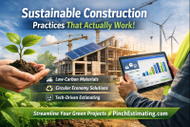
1. Innovative Low-Carbon Materials
Traditional concrete production accounts for a significant portion of global carbon emissions. Enter low-carbon cement and recycled concrete aggregates. These alternatives drastically reduce the environmental footprint of construction projects while maintaining structural integrity.
Other material innovations include:
- Hempcrete and bamboo composites for lightweight, renewable building solutions.
- Reclaimed timber for framing and interior finishes.
- Insulation from recycled textiles and industrial byproducts.
2. Circular Economy in Construction
Adopting a circular economy approach means designing buildings and systems so that materials can be reused, recycled, or composted at the end of their life cycle. This approach not only minimizes waste but can also cut project costs over time.
Practical applications include:
- Modular building components that can be disassembled and reused.
- Construction site waste sorting and on-site recycling programs.
- Designing for longevity and adaptability to reduce future renovations.
3. Tech-Enabled Sustainable Estimating
Integrating technology is key to optimizing sustainable construction. Services like PinchEstimating Services allow teams to accurately track material quantities, waste reduction, and sourcing of recycled or low-carbon materials. By providing real-time data and efficient reporting, contractors can make smarter, greener decisions.
4. Energy Efficiency & On-Site Sustainability
Green building isn’t just about materials. Energy-efficient designs, renewable energy integration, and water conservation systems are transforming how projects are executed:
- Solar-ready roofing and building-integrated photovoltaics (BIPV).
- High-performance insulation and window systems.
- Rainwater harvesting and greywater recycling systems.
? Tip: Sustainable construction doesn’t have to be complex. Start small—track your materials, reduce waste, and explore low-carbon alternatives. Tools like PinchEstimating make it easier than ever.
Final Thoughts
The future of construction is green. By combining innovative materials, circular economy principles, and technology-driven estimating, contractors can deliver projects that are better for the planet and more cost-effective in the long run. Those who embrace sustainable practices today will lead the industry tomorrow.
Want to streamline your green building projects? Visit PinchEstimating Services to see how technology can help you achieve efficiency and sustainability.